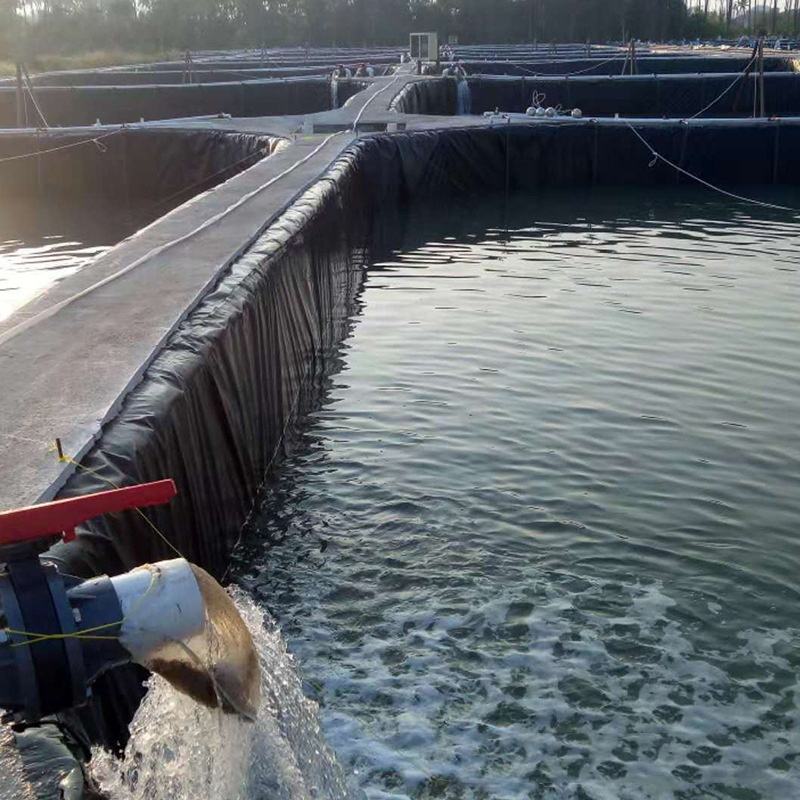
In the modern aquaculture industry, water seepage control and environmental protection are critical to maximizing breeding efficiency and achieving sustainable development. Our High-Density Polyethylene (HDPE) geomembrane stands out as the top choice for large-scale aquaculture operations, thanks to its exceptional impermeability, UV resistance, and long-term corrosion resistance.
A leading recirculating aquaculture facility faced persistent challenges: excessive water loss from traditional earthen ponds, wasted resources, uncontrolled sediment contamination, and strict regulatory limits on aquaculture tailwater discharge. To scale into high-density, intensive farming, they needed a robust seepage control system that would eliminate leaks, stabilize aquatic conditions, block sediment pollution, and protect local ecosystems.
We delivered a turnkey HDPE geomembrane seepage control system tailored to their needs:
✅ Water & Cost Savings: Reduced annual water loss by 300,000+ cubic meters compared to earthen ponds, cutting operational costs for water replenishment and energy.
✅ Improved Aquatic Health: Isolated pond bottoms from water to limit ammonia nitrogen and nitrite buildup, increasing fish/shrimp survival rates by 15% and shortening growth cycles by 10%.
✅ Environmental Compliance: Prevented aquaculture tailwater from contacting soil and groundwater, enabling full regulatory approval and zero-pollution discharge.
✅ Long-Term Durability: UV-stabilized and microbe-resistant HDPE geomembrane delivers a service life of 15+ years, far outperforming traditional seepage control materials.
By adopting our HDPE geomembrane solution, the aquaculture facility transformed into a model of intensive, standardized, and ecological modern farming. The result: higher yields per unit area, improved product quality, and recognition as a green aquaculture industry benchmark. This proven solution is now being replicated across coastal and inland aquaculture projects, driving sustainable industry-wide progress.
 EN
EN